The Unseen Standard: A Thirty-Day Walk to Test Whether Work Holds Without Supervision
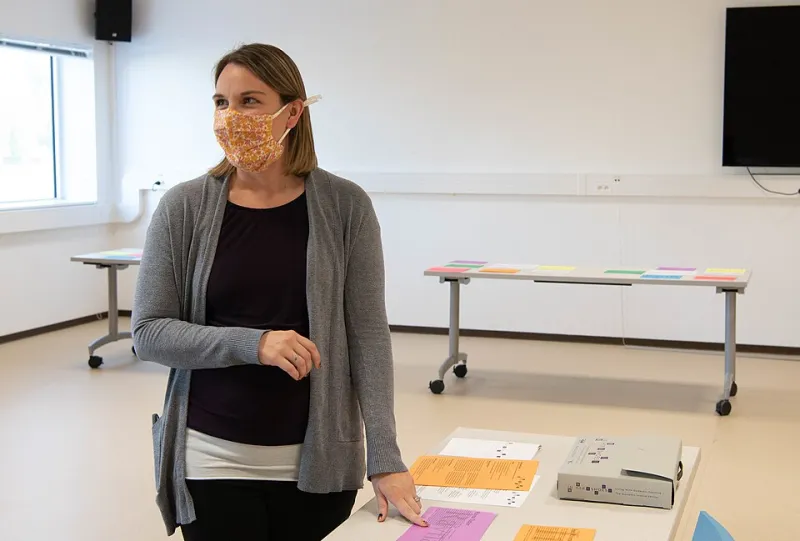
Photo: U.S. Air Force photo by Senior Airman Katharine Winchell, Public domain, via Wikimedia Commons
Most leaders know how a process is supposed to work. Far fewer know how it actually works at 7:40 on a Tuesday morning, when the system is slow, the experienced operator is on vacation, and the customer deadline has not moved. That gap between the documented standard and the daily method is where quality quietly erodes. It is also where improvement begins.
The Baldrige tradition asks organizations to understand their processes, measure what matters, and engage the workforce in improving them. A standard-work walk applies that discipline in a simple way: leaders go to the point of execution, observe without turning the visit into an inspection, and record where the real work diverges from the intended work. The purpose is not to catch people. It is to catch the system before it catches the organization.
Why the Point of Execution Matters
Dashboards describe outcomes. They tell you that a cycle time increased, a defect rate moved, or a service level slipped. They rarely tell you why. The why usually lives at the workstation, the intake desk, the handoff meeting, or the screen where an employee decides what to do next.
When leaders rely only on reports, they can mistake stability for strength. A process may look stable because a few capable people are compensating for missing information, unclear decision rights, or tools that do not fit the work. That is not a standard process. It is a process held together by memory and goodwill.
A standard-work walk tests whether the process holds when the usual heroes are not present. It asks a practical question: if the best person on this step were unavailable tomorrow, would the work still meet the standard? If the answer is uncertain, the leaders have found a system weakness worth fixing.
Design the Walk as Evidence Gathering, Not Enforcement
The credibility of this routine depends on how it is introduced. If employees hear audit, they will show leaders the polished version of the work. If they hear improvement, they may show the real version. The difference is not naivety; it is design.
Before the first observation, leaders should state the purpose in plain terms: we are studying the process, not rating individuals. No one will be disciplined for reporting a workaround. Safety or compliance risks will be addressed immediately, but the broader exercise will focus on system conditions. Process owners should help select the work to be observed and review the findings before any corrective action is announced.
A thirty-day cycle is long enough to see variation across shifts, days, and demand levels, but short enough to keep attention. Select three to five critical processes, not every process. Favor steps where errors are costly, where customers feel the delay, where training is heavy, or where experienced employees are near retirement.
The Thirty-Day Cadence
Days 1 to 5: Define the standard and the scope. Gather the current documented procedure, training materials, control limits, and customer requirements. Clarify what the standard actually requires: sequence, decision criteria, tolerances, documentation, and handoffs. If the standard is ambiguous, that is the first finding.
Days 6 to 10: Prepare the observation log. Use a simple format: date, process step, documented standard, observed method, type of variation, possible system cause, and immediate risk. Keep the log factual. Instead of writing that an employee skipped a step, write that the verification screen was unavailable and the step was completed later from memory.
Days 11 to 25: Observe in short, repeated visits. Walk the work at different times and with different people. Ask process questions rather than personal ones: how do you know this is complete, what do you do when the system is down, where do you get that information, and what makes this step difficult? Observe quietly, and do not interrupt unless there is an immediate safety or quality concern. Rotate observers so the exercise does not become one leader’s impression.
Days 26 to 30: Synthesize and respond. Group the findings by system cause: missing information, unavailable tools, unclear decision rights, schedule pressure, training gaps, supplier variation, or conflicting policies. Select a small number of fixes that will make the standard easier to follow. Report back to the workforce within ten working days. A walk that produces no visible response will not be repeated honestly.
Read Drift with Discipline
Not every deviation is a defect. Some drift is a sensible adaptation to a changed condition. Some is an employee innovation that should become the new standard. The leadership task is to distinguish between helpful adaptation and dangerous improvisation.
Three filters help. First, consistency: does the variation produce the same result across people and shifts? Second, control: is the variation authorized, documented, and understood by the process owner? Third, consequence: does the variation create rework, customer risk, compliance exposure, or hidden dependence on one person?
If the workaround passes all three filters, study it and possibly adopt it. If it fails one or more, fix the system that made the workaround necessary. That may mean simplifying a form, moving information to the point of use, clarifying who can approve an exception, or adjusting staffing at a peak hour. Blaming the person who invented the workaround is easier, but it leaves the underlying condition in place.
Fix the System, Then Verify the Fix
A standard-work walk should end with a short list of system changes, each with an owner and a review date. Avoid the temptation to rewrite the procedure first. Often the procedure is not the problem; the problem is that the procedure assumes information, tools, or time that the work does not provide.
Thirty days after the changes, walk the same process again. Look for whether the workaround disappeared, changed form, or moved downstream. If the same drift returns, the system cause was misdiagnosed. That is useful evidence, not a failure of the exercise.
Excellence is not what happens when a leader is standing nearby. It is what happens when the standard is clear, the tools support the work, and the workforce can follow the method without heroics. A thirty-day walk is a modest routine, but it tells leaders something reports cannot: whether the process is real, or only real when someone is watching.