The Knowledge Monopoly: A Thirty-Day Audit of Critical Know-How

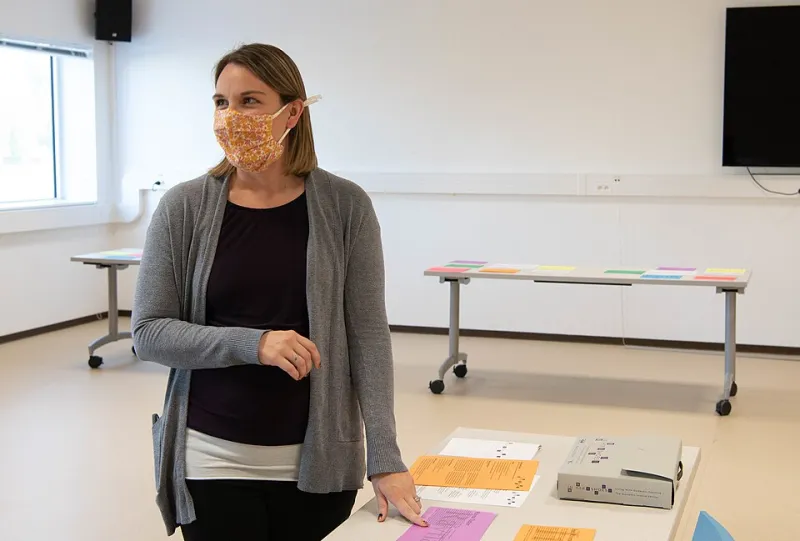
Photo: business employees knowledge transfer shadowing office training, via emmasplate.com
Lean organizations often achieve efficiency by asking capable people to carry more than their job descriptions suggest. The arrangement works until it does not. A retirement, a sudden resignation, a prolonged illness, or even a two-week vacation can reveal that a critical process depends on one person's memory, one unprotected spreadsheet, or one informal workaround that no one else fully understands.
In Baldrige terms, this is a workforce-capability and knowledge-management risk. It is also an operational risk, a customer-experience risk, and sometimes a compliance risk. The purpose of a thirty-day tribal knowledge audit is not to document everything. It is to find the few places where concentrated know-how creates disproportionate business exposure—and to reduce that exposure with lightweight, testable redundancy.
Why the Risk Hides in Plain Sight
Single points of knowing rarely announce themselves. They look like competence. The person who can reconcile the month-end exception report, the scheduler who knows which customer requires a manual confirmation, the analyst who maintains the shadow spreadsheet used in budget reviews—these people are often praised for reliability. The risk is not their performance. The risk is that the organization has not distinguished between individual expertise and organizational capability.
Baldrige-inspired excellence asks leaders to examine how work gets done, how knowledge is transferred, and how the organization learns. A knowledge monopoly is a gap in that system. It is also easy to ignore because nothing fails while the holder is present. The audit should therefore be framed around consequence, not around documentation for its own sake.
Week 1: Frame the Audit Around Consequence
Begin with a narrow scope. Do not attempt to inventory every process in the organization. Instead, ask a simple question: if a key person were unavailable for thirty days, which customer commitments, financial controls, regulatory obligations, or operational handoffs would be at immediate risk?
Gather a small group—no more than five or six people—including a senior operational leader, a frontline supervisor, and someone from human resources or quality. Review business-continuity plans, recent customer escalations, audit findings, onboarding pain points, and retirement or turnover projections. Select ten to fifteen critical functions for review. Name one executive sponsor and one working owner. The charter should fit on one page: scope, timeline, confidentiality expectations, and the decision the audit will inform.
The goal for Week 1 is not a comprehensive risk register. It is a defensible short list of areas where lost know-how would matter within a month, not within a year.
Week 2: Locate the Single Points of Knowing
In Week 2, examine how each critical function actually operates. Use interviews and observation, and ask people to walk through the last three real instances of the work rather than describe the process in general terms. The question "What do you know?" invites a summary. The question "Show me what you did last Tuesday when the exception appeared" produces evidence.
Look for four forms of concentration:
- Person-based knowing: one individual holds the decision rules, customer history, or technical judgment.
- Artifact-based knowing: a spreadsheet, local database, or desktop file contains logic that exists nowhere else.
- Workaround-based knowing: an informal practice compensates for a system limitation, and no one has written down when or why it is used.
- Relationship-based knowing: a vendor contact, regulator, or community partner responds to one person rather than to a documented channel.
Record each finding in a simple register: function, knowledge holder, form of concentration, trigger for use, recovery time if unavailable, and any existing backup. Keep the register factual. The purpose is not to criticize individuals but to make organizational dependence visible.
Week 3: Score Exposure, Not Importance
Not every concentrated knowledge area deserves immediate action. Week 3 should produce a rough exposure score for each item in the register. Use three factors and a five-point scale:
- Likelihood of unavailability: consider vacation, turnover risk, illness, retirement, and single-person coverage.
- Impact if unavailable: consider customer harm, revenue delay, compliance breach, safety, and rework.
- Recoverability: estimate how long it would take another competent person to restore the work from existing documentation and support.
Multiply the three scores or use a simple high-medium-low matrix. Avoid false precision. The value of scoring is to force a conversation about trade-offs, not to create an elaborate model. In most organizations, five to seven items will stand out. Those are the ones worth addressing in Week 4.
Week 4: Build Lightweight Redundancy
Redundancy does not require a library of standard operating procedures. Three lightweight moves are usually enough for the highest-exposure items.
Shadowing with a driving seat. Arrange two half-day shadowing sessions for a designated backup. The first session is observation. In the second, the backup performs the work while the knowledge holder observes and corrects. This tests transfer, not merely exposure.
Decision logs for recurring judgment. For each high-exposure function, create a one-page decision log. Record the decision, the criteria used, the inputs required, common exceptions, and the escalation path. A decision log is more useful than a narrative procedure because it captures the judgment that makes the process work.
Documented exceptions only. Do not document the standard path if it is already reliable. Document the exceptions: when the normal system fails, when a customer requires a manual override, when a regulator asks for an unusual report. These are the moments where tribal knowledge is most valuable and most fragile.
Close the month with a short tabletop exercise. Simulate the absence of one knowledge holder and ask the backup to complete a representative task using only the decision log and available support. Capture what breaks. That list becomes the improvement plan.
The Baldrige Discipline: Learning, Not Librarianship
The audit should strengthen organizational learning, not create a records-management hobby. Measure a small set of indicators: the number of critical functions with a tested backup, the average estimated recovery time, the percentage of high-exposure items with a decision log, and the completion rate for shadowing sessions. Review these indicators in a regular leadership meeting and refresh the register quarterly or whenever a key role changes.
On Day 30, success is not a perfect knowledge repository. Success is a short register of single points of knowing, a defensible exposure ranking, tested backups for the top five risks, and a clear owner for follow-through. That is enough to convert hidden dependence into managed capability—without building a bureaucracy of SOPs.